Liquid Death Case Study
This series reverse engineers the worlds we naturally want to be part of. It's a study of World Builders; the people who create things we want to be part of, not things we need to be sold on. Each episode maps how they do it and who they had to become to create it.
Mike Cesario made water cool by understanding you can't force people to pay attention.
Most brands still act like they can buy their way into people's minds, the focus is on shouting louder, spending more, repeating the same message, and not enough focus on whether what they're saying is worth someone's attention.
What I like about Mike Cesario, the creator of Liquid Death Water, is that he knows that shouting louder with nothing to say doesn't give you the right kind of attention. If you feel like you have to convince people through force or shouting louder, you probably don't have something worth paying attention to.
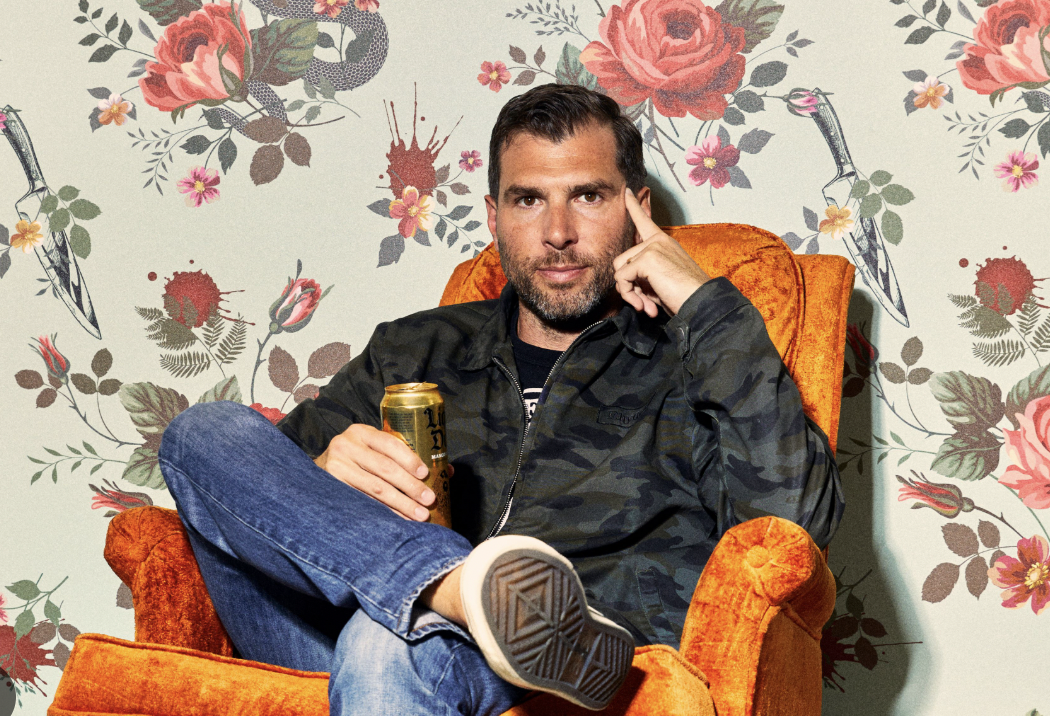
What he did with Liquid Death is take a mundane product and use it to entertain people and give them something worth thinking about. He made the healthy choice the cool choice.
The result? A whole group of people who are typically marketed to by Red Bull, Monster, and energy drink brands are now choosing a healthier option. My favourite is that he has mums writing to him saying "finally my 9-year-old is excited to drink water instead of soda because he feels like he has something he's not supposed to have."
So how do you build something people naturally want to be part of?
Let's look at some characteristics that make Mike a World Builder.
⇢ 1. He made friends with failure
World Builders understand that failure is inevitable. They treat failure as information, not their identity.
Before Liquid Death, Mike worked in ad agencies with brands who didn't want to use his most creative ideas. He didn't make that mean his ideas were bad.
When he left Adland, his first venture was a Brandy Company that failed because he didn't have the right team. When it wasn't working, he didn't make it mean he couldn't build a business. He took what he learned and did things different with Liquid Death. As he puts it, your first idea isn't always going to be the one that succeeds.
⇢ 2. He didn't wait for an opportunity to be handed to him
World Builders don't wait for perfect conditions, they find creative ways to test their vision with the resources they have.
When Mike had his idea for Liquid Death, he had $6,000 in his bank account. But putting water in cans was going to cost $150,000 for the minimum production run. Most people would either give up or compromise the vision.
Instead, Mike created a fake commercial for $1,500 and tested it on Facebook with small ad spends. Over six months, he spent $4,000 total and got 3 million views, proving demand before raising money for production. You can watch it here. It's great.
⇢ 3. His personal experience is his source material
World Builders understand that authenticity can't be faked. They figure out their taste, point of view, and then share from there.
Mike's entire aesthetic comes from his childhood obsessions: Tony Hawk skateboards, Thrasher magazine, Bad Religion, punk rock DIY culture, and his humour from his dad.
The Liquid Death brand is based around this. The skull graphics, the irreverent humour, the anti-establishment attitude - it all traces back to those formative influences. Liquid Death isn't a focus-grouped attempt to appeal to young people; it's Mike's actual taste made into a business.
⇢ 4. He noticed a contradiction that others accept as normal.
World Builders notice. They notice cultural contradictions and ask "why aren't these things paired together?". When everyone else says "that's just how it's done." They see white space hiding in plain sight.
At a Warped Tour in 2009, Mike was backstage and spotted the bands drinking cans of Monster Energy, but it was actually "tour water" - plain water packaged to look like Monster because they were sponsoring the tour.
The lightbulb moment wasn't just seeing the packaging trick. It was noticing the cultural contradiction: why do only junk food brands invest in cool, irreverent marketing? Why aren't healthy brands fun?
⇢ 5. He polarises people. And is ok with it.
World Builders understand that trying to appeal to everyone means appealing to no one. They're willing to be strongly disliked by some people in order to be deeply loved by their people.
When I first came across Liquid Death I was a bit repelled by it. A friend of mine was paid to make some content for them, she was a yoga instructor and I remember being surprised she'd promote energy drinks... But she wasn't promoting energy drinks. It was smart because I still remember it.
Liquid Death isn't for everyone, it's for a very specific type of person and they don't care if they are not for me. Similar to Lisa Canny from last week's case study, Mike is fine with polarising people for the sake of creating new worlds. He'd rather have passionate fans and vocal critics than lukewarm acceptance from everyone.
The World Builder Method
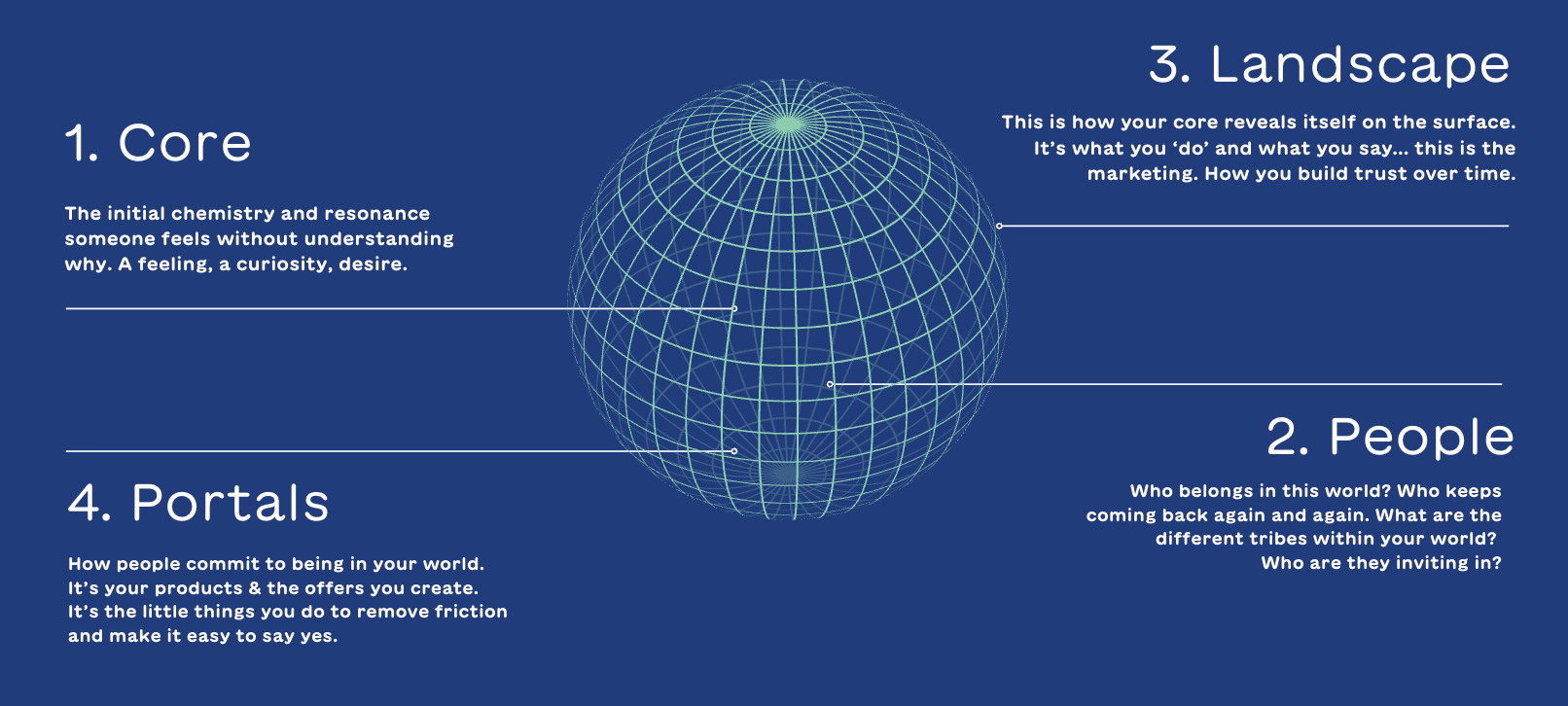
Mike's personal qualities enabled him to build something people naturally gravitate toward, now let's look at his world. For every world that people naturally gravitate toward, there are four components that make people want to belong:
Liquid Death's World
1: The Core → How your world feels
The job of the Core: Create instant chemistry and resonance
The core not always shared publicly, some elements might be, but the job of the core is for the architect to be clear on what is going to resonate and stop people in their tracks. Here's what I see for Liquid Death:
- They have a clear mission: Make healthy brands as entertaining as unhealthy ones. Why should energy drinks have all the cultural cool when water is better for you?
- Strong, consistent values: Anti-marketing sentiment, punk rock authenticity, humour, entertainment and environmental consciousness (canned water vs. plastic bottles).
- A counterintuitive promise: Be the "funniest beverage company in the world" while selling the most boring product - water.
- An opportunity: To reject the false choice between healthy and cool. You can care about your body AND have expectations of cool, funny branding.
"There is a tremendous value in confusion. Believe it or not if you can confuse people you can stop them" - Mike on Vayner Speakers
For your world:
What false choices are you helping people reject?
What counterintuitive pairing could create intrigue?
2: The People → Who belongs in your world
The job of People: Know who you're building for and who they become in your world.
Mike was creating Liquid Death for people like him (common for World Builders). Those who love punk/metal aesthetics and skate culture but don't want to drink energy drinks. His key insight was that "junk food is the only thing that invests in this culture"... energy drinks, soda, and beer dominated marketing to these communities.
"You're not trying to figure out, 'Is this what the kids will like?' It's like, no, do I think this is cool? Do my friends think this is funny? If yes, there's probably literally a million other people who will think the same thing."
It also attracts people who hate marketing. Mike's brother captured this perfectly: "I don't wear a liquid death shirt to communicate I like metal and punk. I wear it to communicate I hate marketing."... This is a common trait of World Builders... they don't market in the traditional sense, their focus is on connection. Not box checking. '
For your world:
What shared frustration do your people have?
How do they become more themselves by choosing you?
3: The Landscape → What people see
The job of the Landscape: Build trust through consistent action over time
Mike didn't start with Tony Hawk collaborations and Super Bowl ads. He started with an ad he produced with friends. He paid $1,500 for an actress and put $4,000 in Facebook ads over six months which got him millions of views, and the same values and mission are consistent in this add. The landscape we see today from Liquid Death today was built methodically, one authentic piece at a time.
- Early proof of concept: Before any product existed, Mike tested his vision with that initial video campaign. This was the beginning of building his landscape, showing he could deliver on the humour promise.
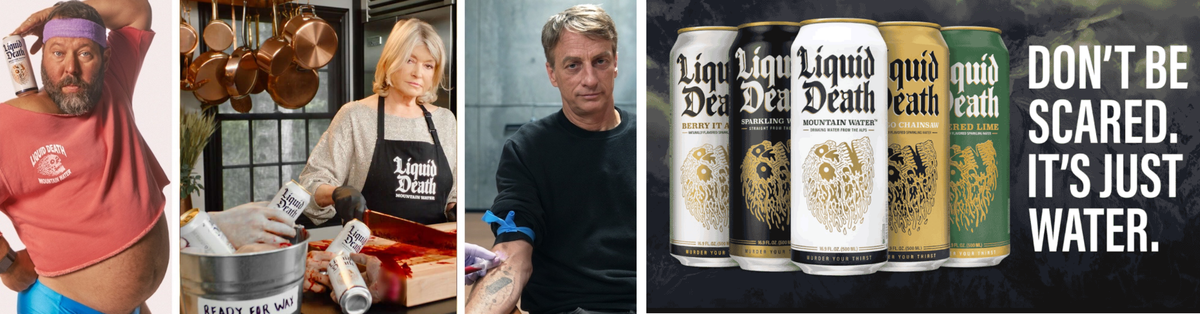
- Consistently funny, and pushing boundaries: Over years, they've consistently delivered on their values. Tony Hawk skateboard with real blood, Martha Stewart severed hand candles, Ozzy Osbourne collaborations. Each campaign built on the last, proving this wasn't a one-hit wonder.
- Strategic partnerships: Every collaboration feels natural to the brand. They're not just celebrity endorsements; they're extensions of Liquid Death's twisted sense of humour, not desperate celebrity grabs.
- Methodical category expansion: They started with still water. When that proved successful, they added sparkling, then flavoured sparkling, then iced tea. Each expansion was informed by customer feedback and launched thoughtfully - three flavours, not ten.
- Environmental mission integration: Their "Death to plastic" message wasn't front and center initially. As the brand matured, they wove it into the humour naturally. They make environmentalism punk rock instead of preachy.
For your world:
Are you building your landscape methodically, or measuring yourself based on someone else 10 steps ahead? What can you consistently deliver with ease before expanding?
4: Portals → How people enter & stay
The job of portals: Make it easy to commit to being in your world
Liquid Death makes engagement effortless:
- Follow social media for entertainment value (11 million followers across platforms)
- Buy a can at 130,000+ retail locations
- Buy limited-edition collaborations that become collector items
- Join the community by "Selling your soul" to a beverage company
The genius is treating the brand like entertainment first, product second. People follow Liquid Death social accounts not to see product updates, but to see what funny thing they'll do next. The entertainment value makes it easy to belong before you even buy anything.
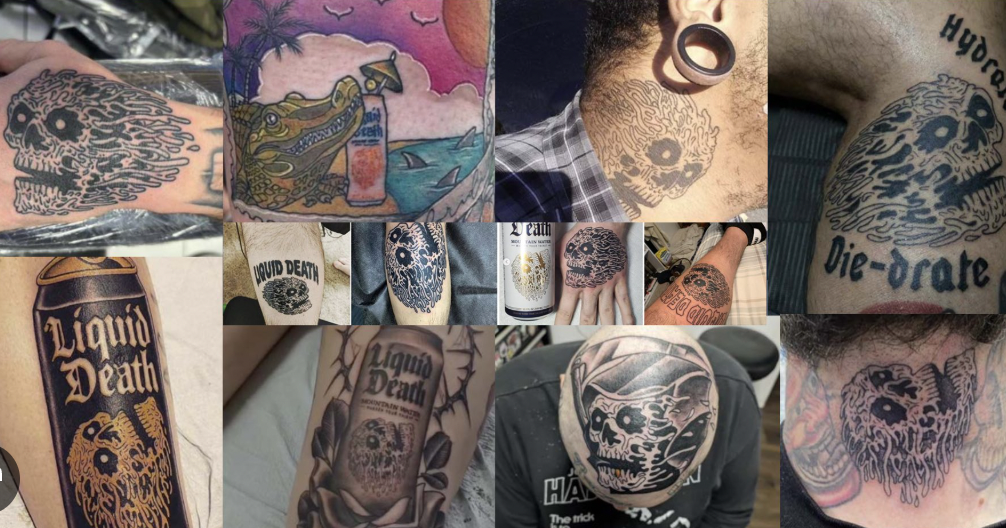
That people are literally tattooing a water brand on their bodies shows the depth of connection Mike has created. You don't tattoo a product - you tattoo an identity.
For your world: Are people engaging with you for value beyond your product?
When It All Works Together
Liquid Death went from $0 to $300+ million in revenue by creating a world around a boring every day product. Mike used his identity and built something for himself and others. In a category where taste differences are imperceptible, story and identity becomes everything.
Mike created a world where being health-conscious doesn't mean being humourless, where you can rebel against marketing by choosing the healthier option with a product that went the extra mile to entertain you.
When someone reaches for Liquid Death instead of Evian, they're not choosing different water - they're choosing to be the kind of person who appreciates the absurdity of spending money on water in a skull-branded can, and finding that absurdity hilarious rather than stupid.
Your Turn
If you're building something, ask yourself:
- Core: What false choice are you helping people reject? What counterintuitive pairing could you explore?
- People: What shared frustration does your audience have that goes beyond your product category?
- Landscape: Are you showing up regularly delivering entertainment or education value beyond your core offering?
- Portals: Do people engage with you for reasons beyond selling your product? What do you do to make it easy and fun to belong?
Next week: We'll explore another World Builder who took a completely different approach. Same principles, entirely different execution.
Build a world one you could create
If you want to become the architect of your own world, I work 1:1 with authors, artists, entrepreneurs, and CEOs to help map and build what they’re really here to create. You can explore my world here →